


Welcome to CHC Legal
The Trust, Foundation, Care & Estate Planning Specialists
CHC Legal delivers sophisticated, planning-led estate solutions — combining advanced Trusts, Wills, LPAs, Long Term Care Solutions & Foundation Structures — to protect wealth, secure family intentions, and build legacies that endure across generations. If you want estate planning that is precise, bespoke, and built to withstand legal scrutiny and real-world change, we invite you to speak with us for free.

How can we help you today?
Most people have heard of trusts, but few know exactly how they could help in their own circumstances. So, rather than start with complicated legal structures, we start with the problem you want to solve.
Below are 10 of the most common reasons people come to CHC Legal. If any of them sound familiar, there's a good chance we can solve your problem.
1
"I've made a will but I've heard this might not be enough to ensure absolutely that my chosen beneficiaries are the ones who will actually inherit. Is this true, because I want to be 100% certain?"
Most people believe that once they've signed a Will their family is protected forever.
Unfortunately, that simply isn't true.
Marriage, remarriage, illness, family disputes, business failure and changes in the law can all completely alter what eventually happens to your estate.
Many families only discover the weaknesses in their planning after it is too late to fix them.
Read the articles below to find out more:
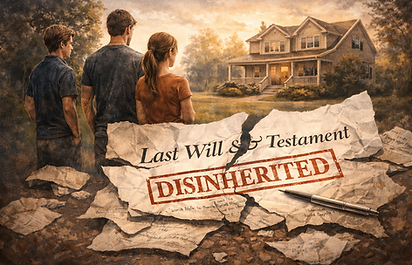
Mirror Wills, Remarriage, and Disinheritance – The horror story that just keeps on repeating.
3
"I run my own business. It's doing well at the moment but I know others for whom things have suddenly gone wrong and they've lost everything - can I protect myself in the event my business fails?"
Yes, the good news is that you can.
By forming a trust or foundation (which is better will depend on your circumstances including where you live, intend to live in the future, how much money/assets you have available etc.) you can create what we generally call a "Rainy Day Fund" so that if the worst happens and you are reduced to penury (or worse - bankruptcy) there is a fund for you to fall back on - this is all perfectly legal provided it is set up properly, and that's really the key to success with this type of planning.
Look at the following page for more details:

5
"I have a mentally disabled child.
Is there any way I can ensure he is looked after and continues to get the same care that I provide even after I'm gone?"
Yes, there is a trusted, well established method for doing this.
Effecting a Trust with assets inside it as trust property (e.g. your family home, bank accounts, investments etc.) with your child as the beneficiary and appointing independent professional trustees, will ensure that when you die your wishes regarding your child will continue to be carried out just as they were when you were alive.
If you effect a Vulnerable Persons Trust, the trust will even benefit from tax advantages.
Look at the following page for more details:
Vulnerable Persons Trusts | CHC Legal

7
"I'm getting married next year, but I've been divorced once before and lost everything. I wouldn't dare bring up a pre-nuptial with my fiancée, so is there any way a trust could protect my assets just in case?"
Yes, a trust is an ideal way of avoiding a future ex-spouse waltzing off with half (or more) of your assets in the event things turn sour - hopefully they won't, but one never knows what the future might hold!
A properly established trust (and independent trustee arrangement) can ensure whatever happens, your pre-marital assets are protected and retained for your (or your intended beneficiaries) benefit and for no-one else's. The most important point for all of this to work is that it's set up properly in the first place and continues to be administered as such.
Read the article below to find out more:

9
"I would dearly like to set up a trust fund for my four grandchildren's educational needs. I don't want them having student loans and getting into debt. Can you tell me how to go about doing this?"
Absolutely. Setting up an educational trust is an excellent way of helping your grandchildren with university fees, living expenses or other educational costs while ensuring the money is used for the purpose you intend.
You decide how much to contribute, who will benefit and how and when funds can be released. A properly drafted trust can provide flexibility, tax efficiency and peace of mind, allowing you to invest in your grandchildren's future while retaining an appropriate level of control over how your gift is managed.
Look at the following page for more details:

2
"I've recently had my house revalued and it's £800,000 which is more than the two nil rate bands of me and my wife! That means a tax bill for my kids and it'll probably go higher still. Anything I can do about it?"
Yes. There are a number of legitimate estate planning options that may help reduce or even eliminate a future Inheritance Tax liability, depending on your circumstances.
These can include the use of lifetime trusts, gifting strategies, life assurance, equity release and other tax-efficient planning. The sooner you take advice, the more options are usually available, as many planning opportunities work best when put in place well before they are needed. We can assess your situation and explain the most appropriate solutions for protecting your family's inheritance.
To learn more about how Trusts work see page:
Trust Terminology Explained: A Structural Guide for New Readers

4
"My mum's health has really got worse and she's gone into care. As she has savings, it's costing £1500 a week but I've heard of something called NHS Continuing Healthcare (CHC). Can she get that?"
NHS Continuing Healthcare (CHC) is a package of care that is fully funded by the NHS for individuals whose primary need is a health need rather than a social care need.
Unlike local authority funding, CHC is not means tested. This means that eligibility is based solely upon the nature, intensity, complexity and unpredictability of a person's healthcare needs—not upon their income, savings or the value of their home.
CHC Legal can both prepare the documentation and represent you - book a free call let's have a chat.
Look at the following page for more details:

6
"I'm in a second marriage but have kids from my first, as does my spouse. We all get on, but is there any way I can make absolutely 100% sure that my own kids are not left out of the inheritance if I die first?"
This is a common question and mirror wills are not the solution - they will only work if you are 100% certain that your widow/widower will not change her/his will after your death - and the simple plain truth is, there's really nothing except a promise to stop them. Do you really trust your spouse enough to risk your children's inheritance? That's the real question you must answer.
A Family Asset Protection Trust, affected while you are still alive, on the other hand provides a cast-iron guarantee that your own children cannot be disinherited no matter what happens after you're gone.
Look at the following page for further details:
Family Asset Protection Trusts | CHC Legal

8
"I run a small limited company with 2 other directors. We have a key man policy in place but what will happen with the shares if one of us dies? I can't imagine my missus will want to be involved in the business."
This is a common concern for business owners. While a key person policy can help protect the business financially, it doesn't determine what happens to a deceased shareholder's shares.
Without proper planning, those shares could pass to a spouse or other beneficiary who has no wish—or no experience—to be involved in the company. A carefully structured business succession plan, potentially involving trusts, shareholder agreements and cross-option arrangements, can help ensure the right people take control while your family receives fair value for your share of the business.
See the page below for a number of options:

10
"I've never married and have no children, but I've always kept dogs and they are my life. Now I've been diagnosed with a terminal illness. Can I set up a trust to care for my dogs when I'm gone?"
Yes, you can.
An Animal Companion Care Trust is a form of Purpose Trust established to provide for the ongoing care, maintenance, and welfare of a named animal or animals after the owner's death.
It enables funds to be set aside and managed by trustees to ensure that arrangements for care, living costs, vets' bills and wellbeing continue in accordance with the settlor’s intentions.
Look at the following page for more details:
Animal Companion Care Trusts | CHC Legal


“Always plan ahead.
It wasn’t raining when Noah built the ark.”
– Cardinal Richard Cushing
Structuring a Trust takes thought, skill and care. Successful trust planning needs time - so do it while the sun is shinning not once the flood has started.
Check out our latest Featured Articles


No matter how involved or complex your wishes, our consultants can help you get everything in order.
When it comes to protecting your family and loved ones, nothing can beat a completely bespoke personal service.